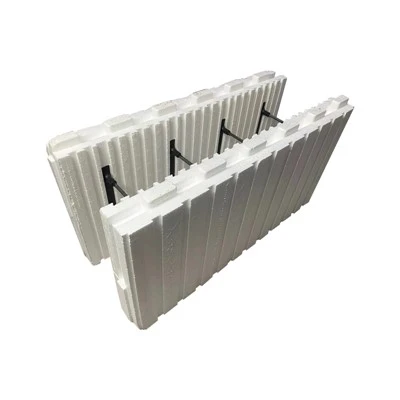
1) Recycling and Granulation: EPS waste is reduced in volume using processes such as heating and densification, cold crushing, or cold compression, and then re-granulated. The resulting EPS particles can then be used directly or mixed with other polymer raw materials (such as linear SBS) to produce plastic alloys for manufacturing plastic products such as clothes hangers, flower pots, videotapes, furniture, building materials, or insulation materials.
2) Crushing EPS waste and using it directly as a low-density additive to mix with other materials (such as concrete, gypsum, or natural fibers) to manufacture lightweight new materials: lightweight roofing insulation materials; foamed concrete insulation boards; fiber-reinforced sound insulation boards; plant fiber-reinforced insulation materials; sound-insulating bricks.
3) Dissolving EPS waste in solvents for direct use as coatings, adhesives, or sealants: Waste polystyrene foam can be specially treated to produce a new type of water-based emulsion coating, ideal for moisture-proofing corrugated cardboard boxes; styrene foam can be dissolved in aromatic hydrocarbons, chlorinated hydrocarbons, aliphatic ketones, or esters, and after reaching a certain concentration, additives can be added and stirred evenly to produce a waterproof coating. Adding different pigments creates colored coatings that can be sprayed on building exteriors, cement floors, and the outer layer of packaging boxes or cartons for waterproofing.
4) Using chemical methods to break down polymers to recover monomers or generate solvent oils. Styrene and aromatic hydrocarbon oils are produced by pyrolysis and catalytic cracking of waste polystyrene. Waste expanded polystyrene is pyrolyzed at 360℃ for 150 min, followed by fractional distillation to obtain styrene with a boiling range of 144–146℃, yielding 70%. If the waste expanded polystyrene is pyrolyzed at 260℃ for 60 min with a catalyst dosage of 1/20 of the waste polystyrene, the styrene yield is 83%, and it is a colorless, oily liquid. Other fractions include benzene, toluene, α-methylstyrene, cumene, propylbenzene, polystyrene, and di and tripolymers.