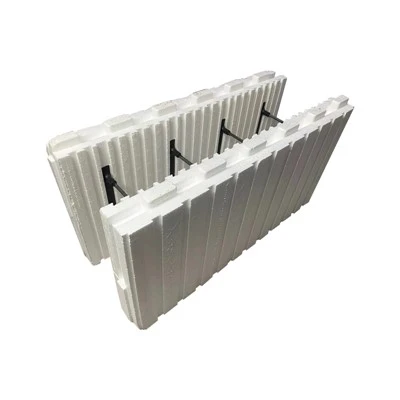
Density: The density of expanded polystyrene (EPS) is typically between 18-25 kg/m³, while that of polystyrene is between 1050-1080 kg/m³. It can be seen that the density of EPS is much lower than that of polystyrene, which is why EPS has excellent thermal insulation properties.
Strength: Under the same conditions, polystyrene has higher strength than EPS. This is because the foaming process of EPS introduces air pores, leading to a decrease in density and thus affecting strength. Polystyrene, on the other hand, does not undergo foaming and has no internal pores, resulting in higher density and strength.
Thermal Conductivity: The thermal conductivity of EPS is very low, reaching 0.03-0.04 W/(m·K), far lower than that of polystyrene. This is one of the important reasons why EPS is commonly used in building materials, insulation materials, and consumable packaging materials.
Environmental Performance: In terms of environmental performance, EPS has better performance than polystyrene. Because expanded polystyrene has a large number of pores inside, it is more elastic and has better shock absorption properties. Moreover, it does not produce harmful substances during processing and use, so it is not only harmless to the human body, but also does not cause any harm to the environment.